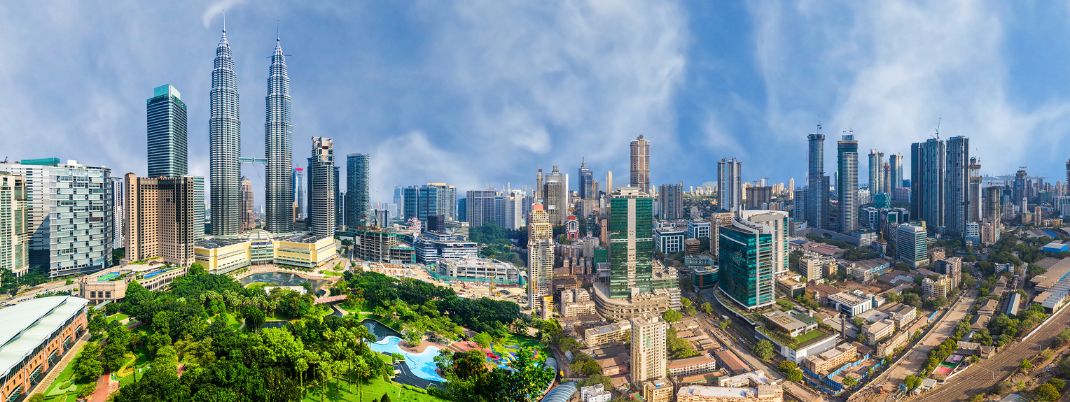
Insights from MRG’s Country Heads in India and Malaysia
As MRG Global continues to strengthen its presence across Asia, its Country Heads play a vital role in translating the firm’s global DNA into meaningful local impact. From Mumbai to Kuala Lumpur, Pramegh Sangle (PS), Country Head – India, and Christopher Brock (CB), Country Head – Malaysia, bring deep sector expertise and a shared commitment to specialised, high‑quality executive search across real estate, construction and infrastructure.
With decades of combined experience across global markets, both lead teams operating in fast‑evolving environments, supporting clients through strategic senior hires while building local platforms with long‑term vision.
Here, they reflect on leadership, market realities and what it takes to build trusted partnerships across borders in Asia.
You both lead MRG’s presence in your region. How has your experience shaped the way you approach building and growing a country office?
PS: Having worked across real estate and hospitality before moving into recruitment, I’ve always approached this work from the client’s perspective first. I’ve seen how decisions are made on the ground and what truly matters to leaders running complex businesses. When I later had the opportunity to build a recruitment practice from scratch, it reinforced the importance of credibility and patience. Markets take time to trust you. At MRG, my focus has been on building a strong foundation with the right team, prioritising long‑term relationships, and ensuring we add genuine value rather than chasing short‑term wins. That mindset still guides most of the decisions I make day to day.
CB: That emphasis on credibility is particularly important in construction and infrastructure as well. I’ve spent close to 20 years focused on these sectors, and trust comes from genuinely understanding how projects are delivered. Many of our clients operate in high‑pressure, technically complex environments, so depth of insight really matters. That’s why I’ve always favoured specialisation over scale, keeping teams lean, deeply knowledgeable, and capable of operating at senior levels. Being based in Malaysia since 2010 has also given me a strong regional lens. While Malaysia is our base, much of our work spans Southeast Asia and beyond, so the office naturally functions as both a local specialist and a regional hub. That focus has remained consistent, even as the market has evolved.
MRG has a distinct global DNA shaped by its origins in London. How do you bring that approach to life locally?
CB: MRG’s London roots bring strong standards around retained executive search and long‑term client relationships. Those principles translate well across Asia. At the same time, no market operates in exactly the same way. In Southeast Asia, hiring decisions are influenced by project pipelines, regional mobility, compensation expectations and the availability of niche skill sets. My role has always been to bridge those two worlds, maintaining international standards while staying flexible enough to navigate local and regional realities.
PS: That balance is just as important in India. We’ve been very deliberate about carrying forward MRG’s focus on specialisation and a consultative way of working. But execution needs to reflect local dynamics. India is fast‑moving, relationship‑driven and often nuanced. Global consistency in standards is essential, but success ultimately comes from strong local market intelligence.
What do you wish more global clients understood about the talent landscape in your country?
PS: India has a very strong pool of senior professionals who are technically capable, commercially astute and increasingly global in outlook. Many have experience working with international stakeholders and are well‑equipped for regional or international roles. At the same time, accessing the right senior talent requires a highly relationship‑led approach. The best candidates are rarely active and decisions to move are influenced by factors far beyond compensation.
CB: In Southeast Asia, one of the biggest misconceptions is the perceived depth of readily available senior talent, particularly for large‑scale or technically complex projects. The reality is that the pool is far more limited than many global clients expect. That makes a consultative, market‑led approach essential. Many of the most capable leaders in the region have built significant parts of their careers overseas, particularly in the Middle East, and are highly selective about the platforms they choose. Thinking regionally rather than purely locally is key.
Your markets are evolving quickly. What trends are having the biggest impact on senior hiring?
PS: Continued inflows of institutional capital across real estate, infrastructure and alternative assets such as data centres, industrial and warehousing and GCCs are driving demand for more sophisticated leadership talent. In many cases, this demand goes beyond what has traditionally existed in the market, particularly at senior level. As a result, organisations are becoming more open to adjacent sector experience and international exposure. At the same time, senior professionals are increasingly selective, assessing platform credibility, long‑term value creation and the quality of partners they work alongside.
CB: Across Southeast Asia, we are seeing similar pressures, particularly in sectors requiring the delivery of highly complex projects. This includes data centres, mission‑critical infrastructure, advanced manufacturing and large mixed‑use developments. Clients are no longer hiring purely for technical capability. They are looking for leaders who can manage multidisciplinary teams, navigate demanding stakeholder environments and deliver at scale, often across multiple markets. International mobility and proven delivery experience are becoming increasingly important differentiators.
Can you share a mandate that stands out for you?
PS: One particularly significant mandate was a COO search for a global real estate fund with an established presence in India. The role required a rare combination of large‑scale project delivery experience and strong strategic and commercial capability. Given the limited availability of such talent locally, we expanded the search internationally and successfully relocated an expatriate professional to India. It was a strong example of how a cross‑border approach can unlock outcomes that would not otherwise be possible in the domestic market.
CB: A mandate that stood out for me involved a senior leadership appointment within the mission‑critical infrastructure space. The brief required an unusual combination of technical depth, leadership capability and international delivery experience, which immediately narrowed the pool. What made it particularly significant was how clearly it reflected the direction the regional market is heading, with clients prioritising leaders who have delivered complex projects across multiple geographies. We are also increasingly seeing the value of professionals returning to their home markets after building international careers, bringing both global perspective and deep local understanding.
What distinguishes MRG’s approach to senior recruitment in your markets?
CB: Our specialisation is the key differentiator. We are fully focused on the built environment, working as strategic partners rather than transactional recruiters. Everything we do is designed around long‑term outcomes and deep client partnerships.
PS: In India, that depth of focus is strengthened further by our closely connected global network. Our teams collaborate across regions, giving us access to international talent and broader insight into how leadership expectations are evolving. Our assessment approach goes well beyond CVs, combining experience with structured evaluation to understand both capability and leadership style.
Looking ahead, what excites you most about MRG’s future in your region?
CB: The scale of opportunity across Southeast Asia is significant. As the region develops, clients increasingly need trusted partners who understand both the technical demands of major projects and the human side of building leadership teams.
PS: That same sense of momentum is very much present in India. We’re expanding our footprint, growing our teams, and continuing to strengthen client relationships. The opportunity to support global firms entering India, while also helping Indian leaders move onto the regional and global stage, is incredibly exciting.
Contact Pramegh Sangle or Christopher Brock to discuss opportunities in Asia.