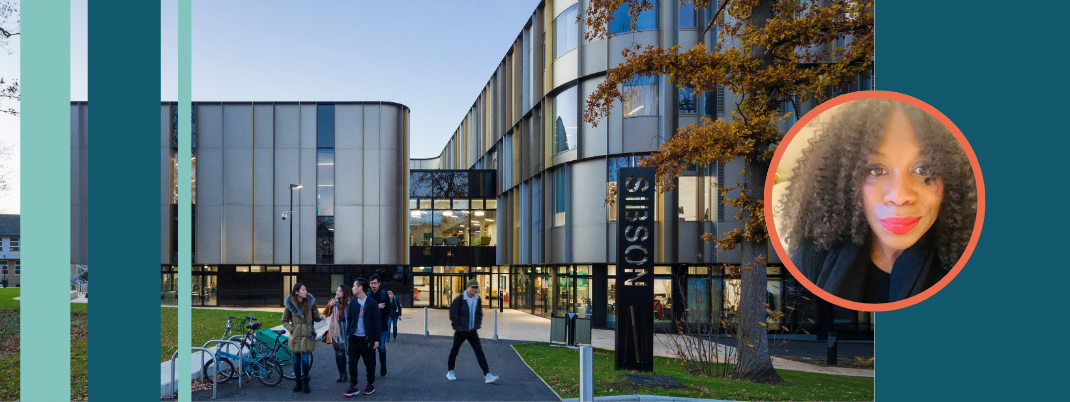
Melissa Browne reflects on the strategic choices universities face when managing commercial services.
In-house vs outsourced provision – Exploring the key elements of forming a decision of how to manage services across FM, catering, and hospitality.
Every university reaches a point where a big, strategic question lands on the table: Do we keep key services in-house, or do we bring in an external partner?
It sounds simple — but anyone who’s been through it knows it’s anything but. These decisions shape culture, finances, staff experience, and ultimately the way a campus feels to live and work on. They’re not just operational choices; they’re identity choices.
At the University of Kent, we recently faced this challenge— a full review of our catering operations. After months of analysis, conversations, and reflection, we decided to partner with Chartwells. It wasn’t driven purely by cost. In fact, what made the process so valuable was that it forced us to get really clear on who we are, what we value, and what we want our campus to be. Looking back, there are some key reflections that I think apply far beyond catering.
The first is the importance of starting with purpose, not price. Too often, outsourcing debates begin and end with the financials. Of course, cost matters but if that’s the only lens, you miss the bigger picture. We began by asking some fundamental questions: What role should catering play in our campus experience? How does it support our ambitions around vibrancy, sustainability, and financial resilience? Once we had those answers, we could properly evaluate the different options: in-house or outsourced.
We also had to be honest about our capacity. Universities are brilliant at a lot of things, but running fast-moving commercial services sometimes isn’t always one of them. The catering sector is constantly evolving — new food trends, digital platforms, branding expectations — and keeping pace takes significant investment and focus. We had great people, but limited resources. Outsourcing wasn’t about stepping back; it was about unlocking capability through partnership.
None of that matters, though, if you lose your people or your culture along the way. Protecting our staff and community spirit was non-negotiable. We spent a lot of time listening, communicating, and making sure our teams felt valued and included. The goal was to ensure that our people remained at the heart of our catering service, the people remained at the centre. Done right, Outsourcing can actually open new opportunities for staff, but only if culture is taken seriously.
Another big shift was how we framed the relationship with Chartwells. We didn’t treat it as a procurement exercise; we treated it as a strategic partnership. That meant focusing on shared goals like sustainability and student engagement, and building flexibility into the contract so we can adapt as things change. The best partnerships bring innovation and investment, but also a willingness to listen and grow together. It’s also worth remembering that the choice isn’t always binary. Many universities are now exploring hybrid models, keeping some services in-house while outsourcing others. For example, some retain hospitality and conferencing internally to keep control over the brand, while outsourcing retail food outlets to tap into market expertise. The trick is making sure the overall experience still feels seamless for students, staff, and visitors.
It’s important to remember that no matter how good that decision is on paper, the transition – and what happens next – can make or break it. Mobilisation is where strategy meets reality. At Kent, we learned the value of starting early, communicating often, and keeping a close eye on the details — from systems to signage. A smooth handover sets the tone for the partnership that follows. And signing the contract isn’t the end of the work. There will no doubt be teething problems, but dealing with them before they become bigger issues is vital. You need to continue engaging with all stakeholders – keep listening, learning and adapting – in order to ensure the change is embedded and works in the long term.
In the end, the in-house vs outsourced debate isn’t really about contracts. It’s about what kind of campus you want to build. There’s no single right answer, and context matters hugely. But if you approach these decisions with strategic clarity, transparency, and people at the heart, you can make choices that strengthen both financial resilience and community. These are the decisions that will shape the student and staff experience of the future.
Community Building through a commercial lense – How to build a sense of belonging through commercial services?
When I think about the role that commercial services play in university life, I no longer see them as a collection of business areas/lines on a budget—catering, accommodation, retail, sport, transport, conferencing. I see them as the heartbeat of campus life. As the environments and interactions that shape how students feel every single day. As the spaces where futures are formed, identities are shaped, and communities are built.
And because of that, I believe deeply that building a sense of belonging is not just “a nice thing to do” or something that sits in the domain of student experience. It is both a commercial imperative and a moral necessity.
It’s clear – belonging is good business -when students feel like they belong, everything changes:
- They stay enrolled.
- They feel safe.
- They contribute.
- They participate.
- They spend time—and money—on campus.
- They return, recommend, and invest emotionally and financially in their institution.
Commercial services underpin this. Our spaces, our services, our staff interactions, our menus, our pricing, our lighting, our accessibility—these choices directly influence whether people feel welcomed or excluded.
If our accommodation feels sterile, or culturally disconnected, or unsafe, students do not settle. If our catering options don’t reflect the cultural backgrounds and dietary needs of our student body, students feel unseen. If our retail offerings only speak to one demographic, we miss an opportunity to communicate: you belong here. The Living Black at University report was a stark reminder. The environments students live in, the services they access, and the cultural relevance of those services are deeply intertwined with their well-being, academic success, and sense of safety. When commercial services fail to reflect diversity and inclusion, retention drops, satisfaction drops, and trust erodes. In short: poor belonging is poor business.
But Beyond Commercial Logic—There Is Duty – This work is not just about being strategic. It’s human.
We hold in our hands the extraordinary privilege of supporting young people—future leaders, thinkers, creators, and change-makers at one of the most formative stages of their lives. It’s an honour and we have a responsibility.
They arrive on our campuses full of hope, anxiety, ambition, uncertainty, excitement, and fear. Some walk in boldly. Others enter quietly. Some find their place quickly. Others need us to make that place visible and clear – You belong here needs to be whispered to them constantly throughout the services we provide and when we interact with students.
Commercial services are not peripheral to their experience—they are the scaffold around it. We shape:
- the spaces where they study late into the night
- the meals that comfort them when they’re far from home
- the rooms they live in as they navigate independence
- the gym where they release stress
- the café where they make their first friends
- the routes they travel when they feel vulnerable
- the symbols and signals that tell them “you belong here”
If we take that responsibility seriously, then every decision becomes moral as well as commercial. Every menu, every policy, every customer interaction, every environment sends messages about who we value and who we centre.
We are community architects. The choices we make in these spaces set the tone for campus life. Commercial teams are often viewed through the lens of operations, logistics, staffing rotas, supply chains, and budgets—but the truth is far more powerful. We are, at our core, community builders. Every service we deliver and every space we manage influences how students feel about themselves, about each other, and about the institution they call home. When we design catering offers that reflect a diverse campus, we are not just feeding people—we are acknowledging their culture, their identity, and their place in our community. When we create accommodation environments where students feel safe, supported, and able to express themselves, we are helping them establish a sense of belonging that supports their academic focus and emotional wellbeing. Our sports centres, cafés, study spaces, transport routes, and customer service interactions become touchpoints that shape human connection. They are the subtle mechanisms through which belonging is built. In this way, commercial services sit at the centre of campus life—not just as business units, but as cultural anchors and emotional safe spaces.
We are the custodians of everyday experience and the architects of connection.
There is no true community building without listening. But listening alone is not enough—action is what transforms feedback into meaningful change. Students tell us, often very clearly, what they need to feel included, comfortable, and seen. Yet too frequently, their voices are acknowledged but not embedded into practice.
Reports like Living Black at University, Unite Students in conjunction with HEPI Applicant Index report and the Global Student Living Index, expose the consequences of that gap: when culturally relevant services are absent, when students feel misunderstood or unsafe, or when their lived realities are not reflected in the spaces they inhabit, belonging collapses. This is why listening must be purposeful and followed by visible decisions.
When students see concrete change—menus updated, environments redesigned, policies adjusted, or staff training enhanced—it signals respect. It demonstrates institutional accountability. It builds trust. And trust is the foundation of belonging. For commercial services, this means closing the loop: not only seeking feedback, but communicating back, acting with integrity, and embedding student voice at every stage of service planning.
Action is the bridge between intention and impact.
I do this work because I believe in the transformative power of belonging. I see commercial services not as transactional units but as lifelines for students navigating one of the most important and vulnerable chapters of their lives. Every student who steps onto campus arrives with their own story, their own hopes, their own challenges, and their own fears. I want them to feel—viscerally—that they matter, that they are welcome, and that this space is for them. It gives me purpose to know that the choices we make about environments, services, and interactions can change someone’s day, influence their confidence, or shape their sense of identity. Supporting our future leaders—scientists, creatives, entrepreneurs, activists, thinkers—as they grow, explore, and discover themselves is a privilege I do not take lightly. I do what I do because commercial services are more than operations. They are the human heartbeat of university life. And I want that heartbeat to be steady, warm, inclusive, and strong for every person who steps into our community.
Where We Go Next
If we truly want to build belonging through a commercial lens, we must:
- Design services around cultural relevance and inclusion
- Train our teams to understand belonging as a service standard
- Activate spaces intentionally to foster community
- Review policies through an equity lens
- Embed belonging metrics alongside financial KPIs
- Communicate that commercial services are community services
- Treat every student interaction as an opportunity for care
Because community building is not a separate initiative; it is woven into every operational decision we make. And because ultimately, commercial services exist not just to generate income—but to create the conditions where our students feel safe, supported, and empowered to discover who they are.
That is both our commercial responsibility and our moral calling.
Thank you to Melissa Browne, Acting Director, Campus Services, University of Kent, for your insights.